Freezer Spell: How to Cast a Binding & Silencing Ritual
Freezer Spell: The Hoodoo Ritual That Freezes an Enemy in Place
A freezer spell does not curse. It stops. Write a name on paper, seal it in water, and set it in the back of the freezer — and for as long as it stays frozen, the tradition holds that the person named cannot move against you. No flame, no blood, no confrontation. Just cold, patience, and a jar most people would walk past a dozen times a day without a second glance.
This is one of American folk magic's most quietly practical rituals. It comes from Hoodoo — African American conjure tradition — and it has outlasted every refrigeration technology it has ever been performed with. This guide covers where the ritual actually comes from, what real practitioners put in the jar (it is rarely just water), the step-by-step method, and how cold-binding compares with its exact opposite: the Chinese fire-and-motion ritual built for the same enemy.
Key Takeaways:
- A freezer spell is Hoodoo binding magic, not a curse — it halts a target's harmful words or actions rather than punishing them, which is why practitioners classify it as defensive
- The ritual predates the home freezer — documented cold-binding work dates to the icebox era of the 1880s-1920s, and it only took its jar-in-the-freezer form once home refrigeration spread in the 1930s
- Traditional versions rarely use plain water — vinegar, alum, black pepper, or a slit cow's tongue or lemon carry specific symbolic intent, and the binding holds only while the jar stays frozen solid
What Is a Freezer Spell?
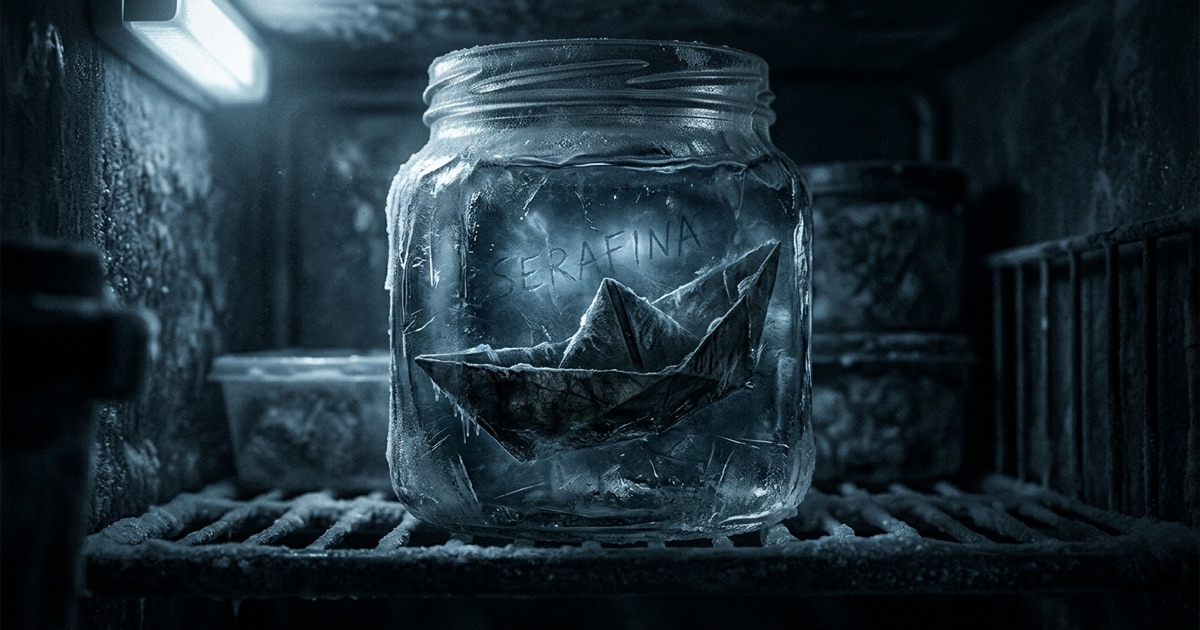
A freezer spell is a Hoodoo binding ritual in which a person's name — or a description of a harmful situation — is written on paper, sealed inside a container of water or another liquid, and placed in a freezer. The cold is believed to halt the target's ability to speak or act against the practitioner. It is a stopping spell, not a harming one, and it remains active only for as long as the contents stay frozen.
The working belongs to a category Hoodoo practitioners call binding work — rituals that restrict or slow someone down rather than inflict suffering. That distinguishes it sharply from hexes and curses, which are designed to cause harm. Its job is narrower: shut up a gossiper, stall a legal threat, freeze a romantic rival out of the picture, or slow down someone actively working against you.
A History Written in Ice
The ritual is older than the appliance it is named for. Documented cold-binding work dates to the icebox era of the 1880s-1920s, when an iceman delivered block ice every few days for the wooden icebox in an ordinary kitchen — and it plausibly reaches further back still, to the ice houses where farmers packed winter pond ice in sawdust to last the summer. But it was rural electrification in the 1930s and 40s that produced the form practiced today: a jar tucked into the back corner of a machine every household owned. No altar, no visible ingredients, no explanation owed to a curious houseguest.
Hoodoo itself formed in the American South from African spiritual practices carried through the transatlantic slave trade, blending with Christian symbolism and European folk elements already present in the region. Cold-binding fits its signature pattern — conjure built from whatever a household actually had. Lucky Mojo, one of the most extensive documentary archives of conjure practice, is explicit that the technique began and stayed within Hoodoo, however widely modern internet witchcraft has borrowed it. And borrowed it has been: rootworkers now routinely describe the gap between the traditional practice — specific ingredients, a genuine grievance, restraint — and the water-and-name-paper shortcut circulating on video platforms, applied to situations the tradition never sanctioned, like a coworker's promotion or an ex's new relationship.

Binding, Not Cursing — How the Magic Works
The mechanism is restraint through cold, not destruction through force. Ice does not burn, break, or destroy — it slows and holds. That single idea is the entire logic of the ritual: the target's ability to move, speak, or act against you is symbolically frozen in place along with the water in the jar.
That puts the work in a different category from the four-step curse framework that recurs across documented cursing traditions. A curse or revenge spell identifies a grievance and inflicts a consequence. A freezer spell identifies a threat and neutralizes it — no punishment intended, just an end to the behavior. Practitioners describe the difference as striking back versus simply making someone stop. Binding still requires justification, though: a jar frozen against someone who has done nothing wrong is treated the same as an unjust curse — liable to rebound on its caster.
What Actually Goes in the Jar
Popular tutorials reduce the ritual to "name paper plus water." Traditional conjure work is more specific — the liquid and additions are chosen to match exactly what the practitioner wants frozen.
| Ingredient | Symbolic Effect | Traditional Use |
|---|---|---|
| Plain water | General binding | The simplest, most common modern base |
| Vinegar | Sours words and reputation | Used against gossip or slander |
| Alum | Silences speech | Stops a talker or a legal threat |
| Black pepper | Banishes | Drives away a persistent irritant |
| Rosemary | Adds protection | Layered into any of the above |
| Cow's tongue (slit, name paper inserted) | Silences gossip at the source | The tongue represents the offending mouth |
| Lemon (slit, name paper inserted) | Sours a target's words and standing | An accessible substitute for cow's tongue |
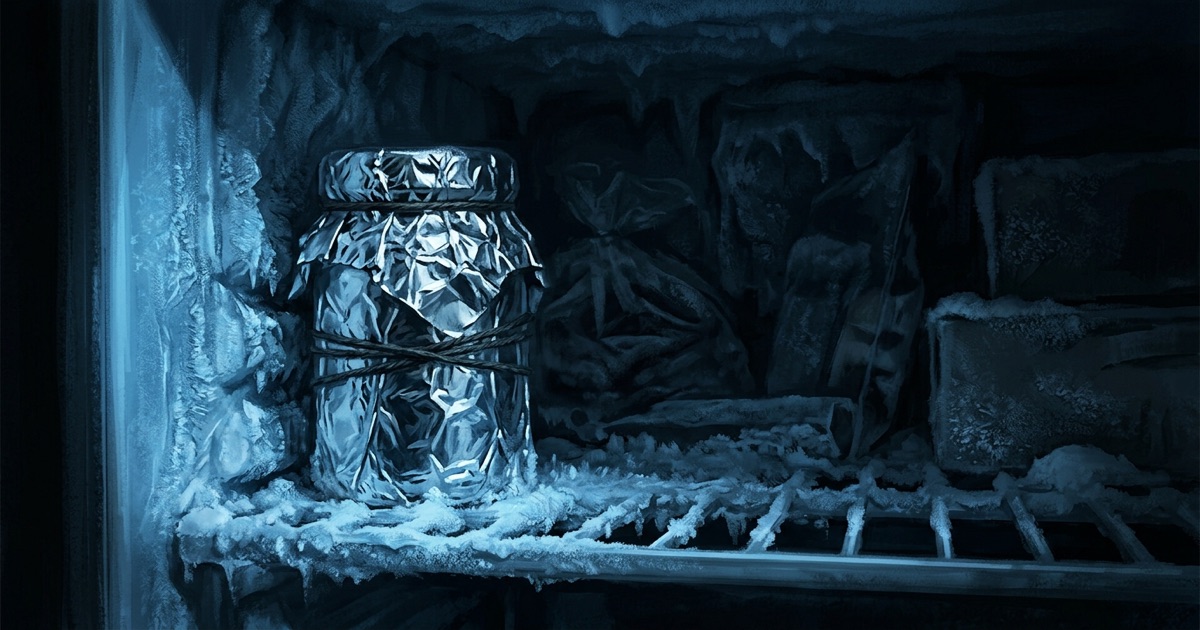
| Foil wrap, shiny side inward | Reflects harm back at the sender | Combines binding with a mirror-return effect |
Oils are deliberately avoided in authentic practice — they do not freeze, so they cannot hold the binding. This is one of the clearest markers separating traditional Hoodoo freezer work from newer, oil-based "witchcraft" adaptations that have spread through social media.
The cow's tongue and lemon methods deserve a closer look, since they are the most distinctly Hoodoo of the ingredient choices. A cow's tongue, sliced down the middle to create a pocket, is used specifically when the goal is silencing gossip or slander — the tongue is a direct physical stand-in for the mouth doing the talking. A lemon prepared the same way is the more commonly available substitute, chosen for its sourness: the fruit is understood to sour the target's words and reputation rather than simply stopping them outright, a subtly different intent from the tongue method. Both are packed with the folded name paper before freezing, rather than submerged loosely in a jar.

Step-by-Step: Casting the Ritual
Materials: A small jar or sealable bag, water (or a symbolic liquid from the table above), a slip of paper, a pen.
- Write the name. On the paper, write the target's full name or a clear description of the situation you want stopped. Fold it away from your own body three times — the fold direction matters symbolically, sealing the intention inward.
- Choose your base. Plain water works for general binding. Vinegar, alum, or black pepper sharpen the intent toward silencing or banishing specifically.
- Load the container. Place the folded paper inside the jar or bag. If using a cow's tongue or lemon, cut a slit and tuck the paper inside before adding it to the container.
- Fill carefully. Fill the jar only to the shoulder, not to the brim — water expands as it freezes, and a completely full sealed jar can crack glass or pop a lid. Experienced practitioners leave the lid loose at first, then tighten it once they confirm nothing has cracked.
- Seal and place. Screw the lid down, optionally wrap the jar in foil (shiny side inward, for an added reflective effect), and place it toward the back of the freezer, undisturbed by daily use.
- Leave it. The binding is considered active for as long as the jar stays frozen. Many practitioners forget about it entirely — which is, in a sense, the point. Out of sight, frozen solid, doing its work.
Freezing vs. Striking — The Chinese Counterpart
Hoodoo is not the only tradition built around stopping one specific person. Chinese folk practice solves the same problem with the opposite physics. Da Siu Yan (打小人, "villain hitting") is a heritage-listed Cantonese ritual in which the wronged party names their enemy, commits that name to a paper figure, and beats the figure with an old shoe before sending it up in smoke. Where the jar restrains — quietly, privately, indefinitely — the shoe confronts: loud, decisive, and finished in a single sitting.
The two rituals make an unusually clean comparison, because they disagree on almost every axis except intent:
| Freezer spell (Hoodoo) | Da Siu Yan (Chinese) | |
|---|---|---|
| Element | Ice — cold and stillness | Fire — heat and motion |
| Action | Seal and wait | Strike and burn |
| Duration | Ongoing — active while frozen | One sitting — ends when the paper burns |
| Setting | Private, hidden in a kitchen | Public — most famously under Hong Kong's Canal Road flyover |
| Tone | Silent restraint | Loud confrontation |
| Goal | Stop the person | Stop the person |
Same grievance, opposite instincts. One tradition freezes the trouble in place and lives quietly alongside it; the other burns the trouble and walks away. If the patience of the jar is not your temperament — if what you want is the finality of watching the problem turn to ash — the Chinese approach can be performed online, following all eight traditional steps. Try the striking version →
Ready to cast your curse?
Experience Hong Kong's heritage-listed curse ritual — 5 steps free, no signup required.
Cast a Curse Now →Freezer Spell vs. Revenge Spell vs. Return-to-Sender — Which Do You Actually Need?
The three are often confused because all three deal with someone who has wronged you. They are not interchangeable.
| Situation | Best Method | Why |
|---|---|---|
| You want someone to stop talking, acting, or interfering | Freezer spell | Halts without inflicting harm — pure restraint |
| You want the person to suffer consequences for a specific wrong | Revenge spell | Directly imposes a punishment tied to a grievance |
| You don't know who is working against you, or want harm reflected rather than imposed | Return-to-sender spell | Reflects incoming harm back to its source instead of generating new harm |
If you are unsure which fits your situation, the safest starting point is almost always the jar — it is the only one of the three that does not require you to be certain a grievance justifies retaliation. It just asks for a pause.
Common Mistakes That Undo the Binding
- Overfilling the jar. A completely full, tightly sealed jar can crack from ice expansion — cracked glass in a freezer is a mess, not a magical effect. Experienced practitioners leave visible headspace and check the jar once before sealing it permanently
- Using oil instead of water. Oil does not freeze at standard freezer temperatures. The binding needs a liquid that actually solidifies to hold it — this is the single most common shortcut that breaks the ritual's own internal logic
- Freezing someone with no real grievance. Practitioners across Hoodoo tradition are consistent on this point — binding without justification is treated the same as an unjust curse, and the casual applications spreading online are specifically called out by rootworkers as a departure from the tradition's ethical standard
- Letting it thaw and forgetting to refreeze. A power outage or an accidental move to the freezer door can thaw the jar. If the binding matters, check on it occasionally
- Placing the jar somewhere it gets disturbed daily. A jar in active rotation at the front of the freezer gets moved, jostled, and eventually used up in the ordinary business of a shared kitchen. The back of the freezer, away from daily traffic, is the traditional placement for a reason
When Is It Justified? Reading the Situation Honestly
Because binding is classified as defensive rather than offensive, it carries a lower bar for justification than a curse or revenge working — but "lower bar" is not "no bar." The traditional framing asks a simple question before casting: is this person actively causing harm right now, or did they simply disagree with you, outcompete you, or move on from you? A freezer spell fits the first situation. It is a poor fit, by the tradition's own internal logic, for the second — using cold-binding magic on someone who has done nothing more than exist in a role you wanted is the exact "willy-nilly" misuse rootworkers warn against.
Further Reading
- Revenge Spells That Work — When restraint isn't enough and you want direct retribution
- Return-to-Sender Spell — Reflecting harm back to an unknown source instead of binding a known one
- Hex Spells and Curses — Hexing vs cursing vs jinxing, and where binding fits among them
- How to Curse Someone — The four-step curse framework, for comparison
- How to Remove a Curse — If you suspect you are the one being frozen, bound, or cursed
- What Is Da Siu Yan — The Chinese tradition of striking, not freezing, a petty person
Frequently Asked Questions
What is a freezer spell?
A freezer spell is a Hoodoo binding ritual that uses cold to halt someone's harmful words or actions against you. A name or intention is written on paper, sealed in water or another liquid, and frozen — the target is symbolically "frozen out" of the situation for as long as the jar stays frozen solid.
Do freezer spells really work?
There is no scientific evidence that freezing a name in water changes a person's behavior. Practitioners report the ritual works through focused intent and, if the target learns of it, the nocebo effect. Whether it produces effects beyond psychology depends on your belief in the tradition.
Is a freezer spell a curse?
No. Hoodoo practitioners classify freezer spells as binding magic, not cursing. The intent is to stop or slow someone down — silence gossip, halt a legal threat, freeze out a rival — not to cause them harm. This is why freezer work is considered defensive rather than offensive.
What ingredients go in a freezer spell?
Traditional versions rarely use plain water. Vinegar sours a gossiper's words, alum silences a talker, black pepper banishes, and rosemary adds protection. Some rootworkers use a cow's tongue or a lemon with a slit cut into it to hold the paper, since both symbolize sour or bound speech. Oils are avoided because they do not freeze.
How long does a freezer spell last?
As long as the jar or bag stays frozen solid, the binding is considered active. If it thaws — a power outage, an accidental move to the front of the freezer, a partial thaw during defrosting — practitioners consider the spell broken and recommend refreezing or recasting it.
Can a freezer spell backfire?
Practitioners across Hoodoo tradition warn that binding an innocent person, or freezing someone out of a situation they had a legitimate right to be part of, can rebound on the caster. The tradition treats freezer work as serious enough to require a genuine grievance, the same ethical standard applied to any binding or reversing spell.
What is the difference between a freezer spell and a mirror spell?
A freezer spell halts — it stops a person's words or actions in place, like ice stopping motion. A mirror or return-to-sender spell reflects — it sends the target's own harmful energy back at them. Freezing restrains; reflecting redirects. Some practitioners combine both, wrapping the freezer jar in foil with the shiny side facing inward.
Why do people use a cow's tongue or lemon in a freezer spell?
Both ingredients symbolize speech. A cow's tongue slit down the middle and packed with a folded name paper is used specifically to silence gossip or slander — the tongue represents the offending mouth. A lemon, cut the same way, sours the target's words and reputation rather than silencing them outright. Both are inserted with the paper, then frozen.
How do you break or undo a freezer spell?
Remove the jar or bag from the freezer and let it fully thaw, then dispose of the contents away from your home — running water or a crossroads are traditional choices. Some practitioners add a spoken release, stating the binding is lifted, before disposal.
Related Curses
What Is Black Magic? Meaning, 8 Types & Where It Originated
Black magic: meaning, main types across cultures, where it originated, and how dark magic rituals work — a plain-English...
28 min readRevenge Spells That Work: Rituals of Retribution Explained
Revenge spells — from ancient curse tablets to modern rituals. Do they work? Are they real? The history, methods, and th...
14 min readWhat Is a Hex? Meaning, Symbols & How Hex Spells Work
A hex is a directed spell of ill fortune. Learn the hex meaning, common hex symbols, whether hexes are real, and how hex...
18 min read