Get Rid of Bad Luck: 7 Rituals to Remove Negative Energy
How to Get Rid of Bad Luck
Bad luck is the shadow that follows you — a streak of misfortune that defies coincidence, a weight that makes every door feel locked and every path feel uphill. When everything goes wrong at once, when the same patterns of failure repeat across different areas of your life, cultures worldwide agree on one thing: this is not random. Something is wrong, and it needs to be fixed.
The desire to get rid of bad luck is an old human impulse. Many cultures have left rituals for cleansing misfortune — Roman banishing ceremonies, Chinese Da Siu Yan rituals whose origin no record can date, and many more. The methods differ. The underlying logic does not: bad luck is not permanent, and it can be removed.
This article covers what bad luck really is, how to tell if your misfortune has a supernatural cause or a psychological one, and the cleansing rituals that cultures worldwide use to remove bad luck and restore balance.
Key Takeaways:
- Bad luck falls on a spectrum from random coincidence to perceived curse — every major tradition distinguishes between ordinary misfortune and spiritual contamination that requires ritual cleansing
- Cleansing rituals share a recurring four-step structure across many cultures: identify the source, perform a purifying physical act, seal the cleansing, and move forward — the specific tools vary but the architecture is the same
- A karma spell can reverse bad luck by asking the universe to rebalance rather than directly confronting the source — the most effective approach combines physical ritual with deliberate behavioral change
What Is Bad Luck?
Bad luck is persistent, disproportionate misfortune — a streak of negative outcomes that exceeds what probability would predict and clusters across unrelated areas of life. Every tradition distinguishes a single setback (life) from a pattern that defies coincidence (煞氣, spiritual contamination, dosha, mal de ojo), and every tradition that names it also prescribes how to remove it.
Bad luck is persistent, disproportionate misfortune — a pattern of negative outcomes that exceeds what probability would predict. Everyone has bad days. Bad luck is different. Bad luck is streaks: losing a job, a relationship, and your health in rapid succession. Things breaking that shouldn't break. Opportunities that evaporate the moment you reach for them.
Cultures define bad luck differently, but the common thread is persistence without obvious cause. A single setback is life. A pattern of setbacks that defies explanation crosses into the territory that every tradition labels differently:
- Western occultism — Spiritual contamination: residual negative energy from a hex, curse, or malevolent attention
- Chinese folk religion — 煞氣 (saat hei): malign influence that clings to a person, often from 得罪小人 (offending a petty person) or 犯太歲 (clashing with the year's governing spirit)
- Hindu tradition — Dosha: planetary misalignment causing sustained misfortune, addressed through parihara (remedial rituals)
- Latin American folk Catholicism — Mal de ojo (evil eye): envy or admiration from others that causes illness and bad luck, especially in children
In every case, bad luck is not just "things going wrong." It is a state — a condition that clings to you and affects everything you touch. And in every tradition that names it, there are methods for getting rid of it.
Signs of Bad Luck — When Misfortune Is a Pattern
How do you know if you are experiencing bad luck rather than ordinary setbacks? No tradition provides a definitive test, but several warning signs appear consistently across cultures:
Spiritual Warning Signs
- Repeating numbers of misfortune — In Chinese tradition, the number 4 (四, near-homophone of 死, death) is avoided as inauspicious. In Western tradition, breaking a mirror invites seven years of misfortune
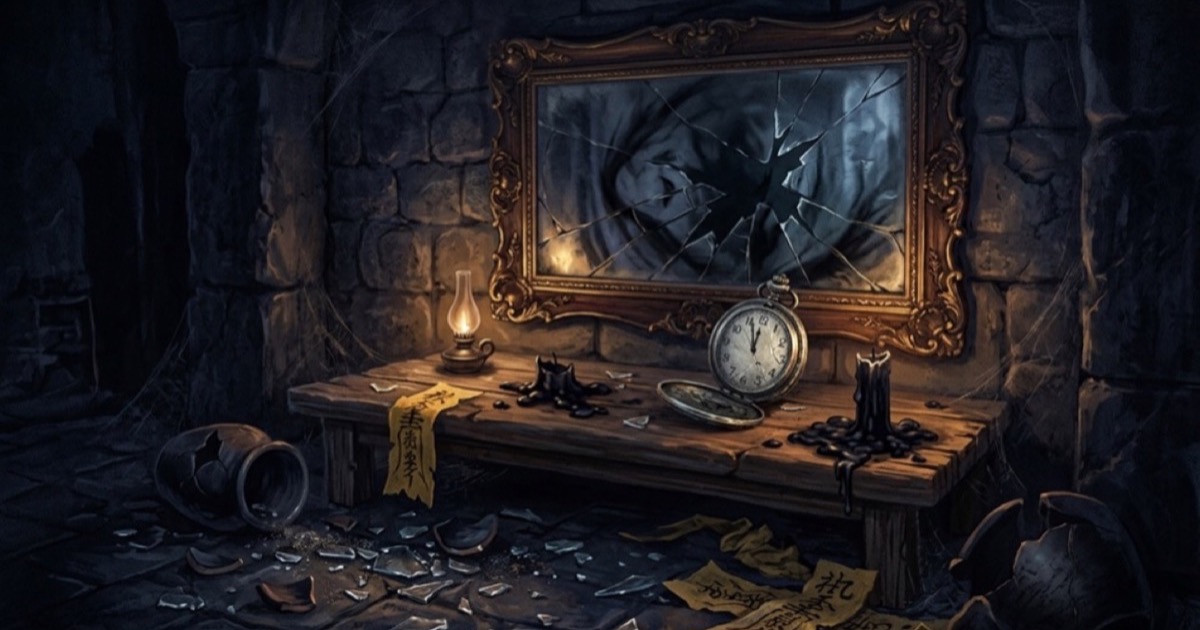
- Broken spiritual objects — Cracked mirrors, shattered statues, or ritual items that break without obvious cause are interpreted as having absorbed a negative force
- Animals behaving strangely — Birds flying into windows, insects swarming without cause, or pets refusing to enter certain rooms
- Unexplained physical sensations — Heaviness in the chest, chills in warm rooms, or the persistent feeling of being watched
Observable Life Patterns
- Simultaneous failure across unrelated areas — Job, health, and relationships deteriorating at the same time with no single connecting cause
- The same mishap repeating — Three car breakdowns in a month, three stolen wallets in a year, the same type of accident occurring on a loop
- Opportunities reversing at the last moment — Promotions revoked after being confirmed, leases that fall through after signing, agreements that dissolve the day before they take effect
- A clear starting point — The misfortune began after a specific event: a conflict, a breakup, a falling out with someone who may wish you harm
These signs do not prove a curse or supernatural cause. But they are the patterns that every cleansing tradition is designed to address. When misfortune becomes a pattern rather than an event, it crosses the threshold from coincidence into the territory of bad luck that requires intervention.
Why Do You Have Bad Luck?
Before you can get rid of bad luck, you need to understand where it comes from. Every tradition identifies different categories of cause:
Spiritual Causes
- A curse or hex — Someone has performed a revenge spell or hex against you. The misfortune is deliberate, targeted, and will persist until the curse is broken or cleansed. If you suspect this, see our guide on how to remove a curse
- The evil eye — Someone's envy or admiration has attached negative energy to you without deliberate ritual. Common in Mediterranean, Middle Eastern, and Latin American traditions
- Offending a spirit or deity — In Chinese folk religion, neglecting ancestral worship or offending a local deity can invite misfortune. In Hindu tradition, planetary misalignment (dosha) produces sustained bad luck
- Entering a contaminated place — Some locations carry residual negative energy. Spending time in these places can transfer bad luck to you
Psychological Causes
- Confirmation bias — You expect bad luck, so you notice misfortune and ignore good fortune. Psychologists have documented that belief in bad luck makes people perceive more of it, even when their actual outcomes are normal
- Self-fulfilling prophecy — Believing you are unlucky changes your behavior. You take fewer risks, expect failure, and create the conditions for the failure you fear. The nocebo effect demonstrates that negative expectations produce negative outcomes
- Learned helplessness — After a string of genuine setbacks, you stop trying. The bad luck becomes self-sustaining not because of spiritual forces but because you have stopped acting to change your circumstances
Environmental Causes
- Toxic relationships — The "petty person" (小人) in Chinese tradition is someone who drains your energy, sabotages your efforts, or undermines your confidence. Removing them from your life can feel like lifting a curse
- Chronic stress — Sustained stress degrades decision-making, health, and relationships — producing outcomes identical to bad luck. The cause is physiological, not spiritual, but the experience is the same
The source matters because it determines the cure. A curse requires a targeted removal ritual — how to break a bad luck curse covers the specific breaking spells. Confirmation bias requires a change in thinking. A toxic person requires boundaries. The most stubborn cases of bad luck have multiple sources — spiritual and psychological layers stacked on top of each other, each reinforcing the other.
How to Get Rid of Bad Luck — Cleansing Rituals Across Cultures
The methods for removing bad luck are as old as the concept itself. Despite spanning continents and millennia, they share a consistent architecture: a physical act that symbolizes purification, performed with focused intention, sealed by a definitive closing.
Salt Purification — European and Middle Eastern Tradition
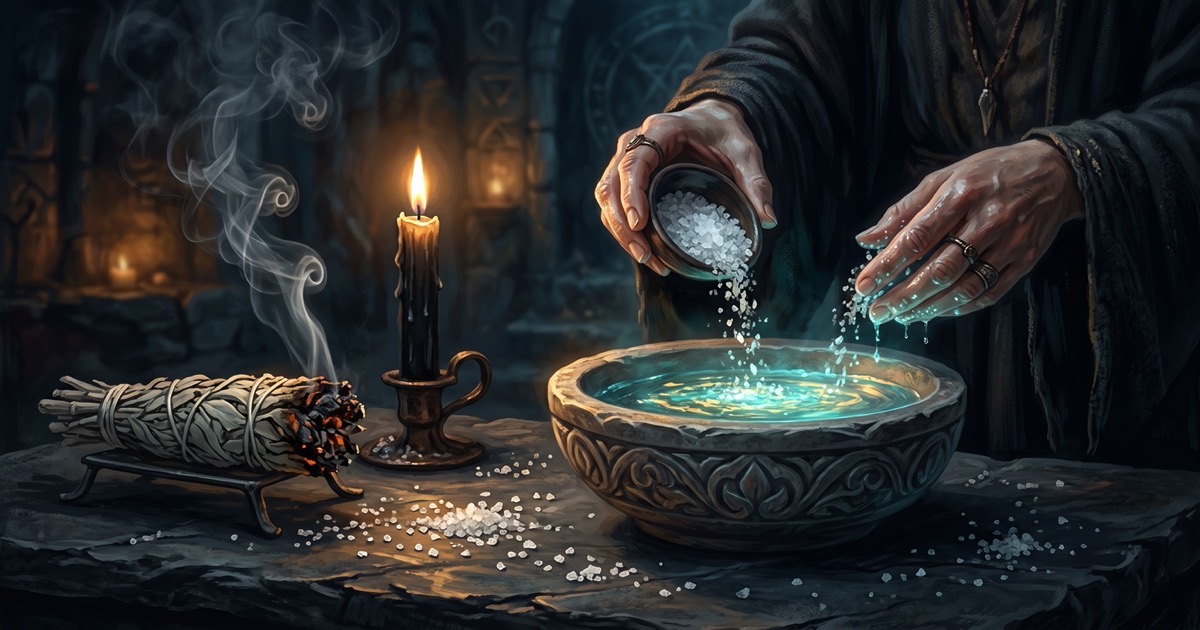
Salt has been used to get rid of bad luck for thousands of years. A popular folk etymology claims Roman soldiers were paid in salt (salarium, the supposed origin of "salary") because it was considered purifying and protective — though historians now regard this as a myth rather than a documented fact. In European folk magic, salt absorbs negative energy and creates a barrier against contamination.
Method:
- Dissolve a handful of sea salt in warm water
- Bathe in the salt water, focusing on the intention that misfortune is dissolving and washing away
- Do not reuse the water — it has absorbed the negativity. Drain it completely
- Some traditions add rosemary or bay leaves to the bath for additional protective properties
The ancient Roman practice of mola salsa — salted flour offered to gods for purification — demonstrates how deeply salt is embedded in Western cleansing traditions. Salt lines across doorways and windowsills remain a common folk practice for preventing bad luck from re-entering a home.
Sage Smudging — Native American Tradition
Burning sage (Salvia apiana, white sage) to cleanse spaces and people of negative energy is a Native American practice that has been adopted widely in modern spiritual communities. The smoke is believed to attach to negative energy and carry it away as it dissipates.
Method:
- Light a bundle of dried white sage until it smolders (not open flames)
- Walk through your living space, directing smoke into corners, closets, and behind doors — places where negative energy accumulates
- Pass the smoke over your body from head to toe
- Open windows to allow the smoke — and the negativity it carries — to leave
Cultural note: White sage is sacred to several Native American tribes. If you use this method, source sage from ethical suppliers who respect indigenous harvesting practices.
Egg Cleansing — Latin American Tradition
In Mexican and Latin American folk healing, an egg is rolled over the body to absorb bad luck, negative energy, and the effects of mal de ojo. The egg acts as a sponge — it draws out contamination and traps it.
Method:
- Use a raw egg at room temperature
- Roll it slowly over your entire body, from the top of your head down to your feet, with gentle pressure
- Pay special attention to areas where you feel tension, heaviness, or discomfort
- After the cleansing, crack the egg into a glass of water and examine the yolk — bubbles, strings, or unusual shapes are interpreted as evidence of absorbed negative energy
- Dispose of the egg away from your home
This practice is documented in anthropological studies of curanderismo — Mexican folk healing that blends indigenous and Catholic elements into a comprehensive system for addressing physical, spiritual, and emotional ailments.
Bathing Rituals — Japanese and Hindu Traditions
Water-based cleansing rituals appear in both Japanese Shinto and Hindu traditions, each with their own methodology for removing bad luck:
Japanese Misogi (禊):
- A Shinto purification ritual involving standing under a waterfall or pouring cold water over the body
- The cold water washes away spiritual pollution (kegare) — the Shinto concept closest to bad luck
- Practiced at shrines and temples, often at the start of a new year or before important undertakings
Hindu Snana and Ganga Snan:
- Ritual bathing in sacred rivers, especially the Ganges, to cleanse karma and remove dosha (planetary misalignment)
- For those unable to travel to sacred rivers, adding Ganges water (available in small bottles from temples) to a regular bath is considered sufficient
- Performed on specific days determined by astrological calculations for maximum effectiveness
Chinese Da Siu Yan — Beating the Petty Person
The most direct method for getting rid of bad luck in Chinese tradition is Da Siu Yan (打小人) — beating the petty person. Practiced for generations at Hong Kong's Goose Neck Bridge and recognized as the city's intangible cultural heritage, Da Siu Yan is a living bad luck removal ritual that addresses the most common cause of misfortune in Chinese folk belief: the petty person who is causing your bad luck.
The ritual follows a comprehensive eight-step process known as the 八部曲 (eight movements):
- Invite the deities (請神) — Light incense and candles to establish sacred space
- Register the complaint (稟告) — Write the client's name on a 百解符 (hundred-solutions talisman) and the target's name on a paper effigy
- Pass through fire (過火) — Purify both documents over candle flames
- Strike the effigy (打小人) — Hit the paper figure with a shoe, channeling anger and breaking the petty person's hold on your luck
- White Tiger sacrifice (祭白虎) — Place the effigy into a paper White Tiger's mouth, offer raw pork, and burn them together
- Dispel misfortune (化解) — Scatter rice and five-color beans to disperse residual negative energy
- Pray for blessings (祈福/進寶) — Burn red 貴人紙 (noble-person paper) and gold/silver paper money to invite good fortune
- Confirm with divination (擲筊) — Throw crescent-shaped wooden blocks to verify the ritual's success
Unlike passive cleansing methods that wash or smoke away negative energy, Da Siu Yan is active — you directly confront the source of your bad luck and destroy it, then actively invite good fortune to replace what was removed. This is why practitioners report immediate relief: the ritual externalizes the problem into a physical form you can see, touch, and eliminate.
You can experience the complete Da Siu Yan ritual online — begin the bad luck removal ritual →
Witchcraft Methods for Removing Bad Luck
In Western folk witchcraft, bad luck is treated as something that can be reversed or returned. Common methods include candle work (dressing a black or white candle with banishing oils while naming the misfortune), reversing spells that send the bad luck back to its source, and freezer spells that freeze a recurring problem in place. If the bad luck seems attached to a specific object — jewelry, a gift, an inherited item — the same tools (salt, smoke, or sound) can be used to clear the object itself. These work through the same mechanism as the cleansing rituals above: they give the misfortune a physical form and a ritual exit — and for many practitioners, they are the most direct way to take control spiritually.
The Karma Spell — Reversing Bad Luck Through Balance
A karma spell can serve as a defensive tool against bad luck. Rather than directly cleansing the misfortune, a karma spell asks the universe to rebalance the scales — to redirect the negative energy that has accumulated around you back to its source, or to dissolve it entirely through cosmic justice.
The concept behind a karma spell for bad luck reversal is straightforward: if your misfortune is caused by someone else's malice (a curse, a hex, the evil eye), a karma spell does not attack them in return. Instead, it petitions the universe to restore balance. The practitioner does not specify the punishment. They present the grievance and trust the outcome.
A karma spell for bad luck typically involves:
- Writing down the misfortune — List everything that has gone wrong. Be specific. Dates, events, losses
- Naming the suspected source — If you believe someone caused your bad luck, write their name. If you don't know the source, write "whoever has sent this misfortune"
- Releasing attachment to outcome — State that you accept whatever the universe decides. The karma spell is not about revenge — it is about restoration
- Burning the paper — The physical act of burning the written grievance symbolizes releasing the bad luck. As the paper turns to ash, so does the hold the misfortune has on you
This approach differs from the direct cleansing rituals above. Where salt baths, sage, and eggs actively remove negative energy, a karma spell delegates the work to spiritual forces. Many practitioners combine both: a physical cleansing to remove the contamination, followed by a karma spell to address any residual imbalance and prevent recurrence.
For more on the ethical dimensions of using spells for restoration versus retribution, see our guide to revenge spells and magical justice.

How to Remove Bad Luck from Your Body
Most searches behind this guide ask a surprisingly specific question: not "how does bad luck work" but how to get it out of your body — the feeling of heaviness, the sense that misfortune is clinging to you personally rather than happening around you. The traditions above answer this directly, because nearly all of them treat bad luck as something that attaches to a person and can be washed, smoked, or struck off.
The Full-Body Cleanse (At Home)
A home protocol synthesized from the traditions above — everything here is drawn from the methods already described, assembled into one sequence:
| Step | Method | Source tradition |
|---|---|---|
| 1 | Shower scrub with salt, working from the head down | Salt purification (European and Middle Eastern) |
| 2 | Full bath with a handful of salt — or Ganges water added to a regular bath, which the Hindu tradition considers sufficient at home | Bathing rituals (Hindu tradition) |
| 3 | Egg cleanse as described above: pass a raw egg over the whole body, then dispose of it as the tradition prescribes | Egg cleansing (Latin American) |
| 4 | Smoke pass with sage, head to toe, front and back | Smudging (Native American tradition) |
Do all four in one evening or spread them across a week — the traditions differ on timing. What they share is the premise: the body is the surface where misfortune sticks, so that is where the cleansing happens. No shrine or practitioner is required; this is the at-home version of rituals that originally demanded travel or specialists.
When the Cleanse Doesn't Hold
If the pattern returns within weeks of a full cleanse, the traditions' next question changes: not "how do I wash this off" but "is this even my bad luck?" A pattern that survives repeated cleansing is what the curse-removal traditions treat as a deliberate working — a different problem with stronger interventions. Our guide to How to Remove a Curse covers the signs that distinguish a curse from ordinary bad luck, and the specific methods each tradition prescribes for breaking one.
How Long Does Bad Luck Last?
How long does bad luck last? Folk traditions agree on the core principle: bad luck persists until it is actively addressed. The evil eye may fade in days as envious attention moves on; a deliberate curse is believed to last indefinitely until broken; 犯太歲 misfortune lasts the lunar year. Self-sustaining bad luck driven by confirmation bias can last for years without conscious intervention.
There is no single answer. Every tradition provides different timelines, but the consistent principle is this: bad luck persists until it is addressed.
In folk tradition:
- A minor case of the evil eye may dissipate on its own within days or weeks as the envious attention moves elsewhere
- A deliberate curse or hex will persist indefinitely until broken or cleansed — there is no natural expiration
- 犯太歲 (clashing with the year's governing spirit) lasts for the lunar year and is addressed through temple rituals at the start of the new year
- 煞氣 from a petty person persists as long as that person remains active in your life
In psychology:
- A streak of genuine random misfortune can create a self-fulfilling cycle of expected failure that lasts months or years — not because the bad luck is real, but because the belief in it changes behavior
- Breaking the psychological cycle requires conscious effort: tracking positive outcomes, challenging negative assumptions, and rebuilding a sense of agency
- The nocebo effect demonstrates that believing you are cursed can produce real anxiety, sleep disruption, and stress-related illness — creating genuine misfortune from a supernatural belief
The most stubborn cases of bad luck are those with both spiritual and psychological layers — a curse that creates real misfortune, which then creates a pattern of expected failure that outlasts the curse itself. This is why the most effective approach combines physical cleansing rituals (to address the spiritual layer) with deliberate behavioral change (to address the psychological layer).
How to Get Rid of a Bad Omen
How do you get rid of a bad omen? A bad omen is a warning, not a verdict — it signals that misfortune may be approaching, not that it is sealed. Traditions worldwide neutralize omens the same way: acknowledge the sign, perform a small cleansing or protective act (salt, incense, a spoken counter-blessing), then deliberately reset your intention. The act breaks its grip before it can become a self-fulfilling prophecy.
A bad omen is not the same as bad luck itself. Bad luck is misfortune already in motion; an omen is a perceived warning that misfortune is coming — a broken mirror, a black cat crossing your path, a bird striking a window, an inauspicious number, or a dream of death. Across cultures, the response is remarkably consistent:
- Acknowledge it, then release it. A sign only has power if you feed it attention. Naming it out loud — "I saw the sign, and I let it go" — strips its hold.
- Perform an immediate small cleansing. Sprinkle salt across the threshold, light incense, or wash your hands and face with cold water. The physical act tells your mind the warning has been answered.
- Counter it with a deliberate good act. Many traditions "cancel" the sign by immediately doing something auspicious — giving to someone in need, speaking a blessing, or knocking on wood to reset the moment.
- If the omen points to a specific person, a targeted ritual like the Da Siu Yan villain-hitting ceremony addresses the source of the ill will directly, rather than the symptom.
The danger of a bad omen is never the sign itself — it is the anxiety it plants. Treated promptly, it dissolves. Left to fester, the nocebo effect turns the expectation of misfortune into misfortune itself.
Cleansing Methods Compared
| Method | Tradition | How It Works | Best For |
|---|---|---|---|
| Salt bath | European, Middle Eastern | Salt absorbs negative energy; water washes it away | General misfortune, feeling "heavy" or contaminated |
| Sage smudging | Native American | Smoke attaches to negativity and carries it away | Cleansing spaces, removing lingering energy |
| Egg cleansing | Latin American | Raw egg absorbs negative energy through physical contact | Evil eye, sudden onset of bad luck, physical symptoms |
| Misogi (waterfall) | Japanese Shinto | Cold water washes away spiritual pollution (kegare) | Deep cleansing, starting fresh after major setbacks |
| Ganga Snan (sacred bath) | Hindu | Sacred river water dissolves karma and planetary misalignment | Dosha, inherited bad luck, astrological causes |
| Da Siu Yan (打小人) | Chinese folk religion | Strike and burn effigy of the petty person causing misfortune | Targeted bad luck from a specific person |
| Karma spell | Modern eclectic practice | Petition the universe to restore balance and dissolve negativity | Uncertain source, ethical concerns about direct action |
How to Remove Bad Luck — The Universal Four-Step Method
Regardless of which tradition you follow, the answer to how to undo bad luck follows four universal steps. This is the same universal structure found in curse rituals and curse-breaking ceremonies worldwide — applied here to the specific goal of removing misfortune.
Step 1: Identify the Source
Determine whether your bad luck has a spiritual cause (curse, hex, evil eye), a psychological pattern (confirmation bias, learned helplessness), or an environmental source (toxic person, chronic stress). The cleansing method you choose should match the source. A salt bath will not fix a toxic relationship. Setting boundaries will not break a curse.
Step 2: Choose Your Cleansing Method
Select a ritual from the traditions above that resonates with your belief system. There is no "strongest" method — the most effective cleansing is the one you perform with genuine conviction. A salt bath performed with full intention is more effective than a Da Siu Yan ritual performed as a joke. Your belief is the engine. The ritual is the vehicle.
Step 3: Perform the Ritual with Intention
Execute the cleansing method you have chosen. Speak your purpose aloud — "I am removing the bad luck that has followed me." The physical act of bathing, burning, striking, or smudging is the mechanism that externalizes your intention. Your mind directs the energy. Your body executes the action. Together, they break the pattern.
Step 4: Seal the Cleansing and Move Forward
Close the ritual by stating that the bad luck is gone. Walk away. Do not revisit the cleansing or dwell on the misfortune. In every tradition, the sealing is the most important step — it is the moment of release. A cleansing ritual that you keep thinking about has not been sealed. The bad luck will return if you reopen the door.

Who did this to you?
Cleansing takes it off you. Da Siu Yan goes after them. Write their name, strike the effigy, burn it — the first five steps are free, no signup.
Strike Back →Further Reading
- How to Remove a Curse — Signs you're cursed and specific curse-breaking methods
- What is Black Magic — Understanding dark magic and its relationship to bad luck
- Revenge Spells — When justice demands magical action
- Hex Spells and Curses — Hexing vs cursing vs jinxing explained
- What is Da Siu Yan — The Chinese bad luck removal tradition: generations of ritual
- History of Villain Hitting — From Goose Neck Bridge to the digital age
Frequently Asked Questions
What are signs of bad luck?
Signs of bad luck include simultaneous failure across unrelated life areas (job, health, relationships), repeating patterns of the same accident or mishap, opportunities reversing at the last moment, broken spiritual objects, and persistent unexplained physical sensations like heaviness or chills. One setback is life — a pattern of setbacks that defies coincidence crosses into the territory most traditions recognize as bad luck.
Can someone put a curse of bad luck on you?
Yes — in folk tradition, a hex, curse, or evil eye can attach persistent misfortune to a specific person. The evil eye (mal de ojo) causes bad luck through envy alone, requiring no ritual. A deliberate curse requires someone to perform a spell targeting you. Whether the supernatural effects are real, the psychological impact of believing you've been cursed is well-documented and can produce genuine misfortune through anxiety and self-fulfilling prophecy.
How long does bad luck last?
Bad luck persists until it is addressed. A minor case of the evil eye may dissipate on its own within days as the envious attention moves elsewhere. A deliberate curse or hex is believed to persist indefinitely until broken or cleansed. In Chinese tradition, bad luck from clashing with the year's governing spirit lasts the lunar year. Self-sustaining bad luck driven by confirmation bias can last months or years without conscious intervention.
Is bad luck real?
Bad luck as a measurable spiritual force has not been confirmed by controlled scientific study. However, the psychological mechanisms behind bad luck are real and documented — confirmation bias makes you notice misfortune and ignore good fortune, self-fulfilling prophecy makes you expect failure and create it, and learned helplessness makes you stop trying after repeated setbacks. Whether you believe the cause is spiritual or psychological, the experience of persistent misfortune is genuine.
How to reverse bad luck?
Every tradition uses physical cleansing rituals to reverse bad luck: salt baths absorb negative energy, sage smoke carries it away, egg cleansing draws it out, and Chinese Da Siu Yan strikes and burns the source of misfortune. The universal method is identify the source, choose a cleansing ritual, perform it with focused intention, and seal the cleansing by walking away. The most effective approach combines physical ritual with deliberate behavioral change.
Why do I have bad luck?
Bad luck has three categories of causes. Spiritual causes include curses, hexes, the evil eye, or offending a spirit or deity. Psychological causes include confirmation bias (noticing only negative outcomes), self-fulfilling prophecy (expecting failure and creating it), and learned helplessness (giving up after setbacks). Environmental causes include toxic relationships — the petty person who drains your energy — and chronic stress that degrades decision-making. The most stubborn cases involve multiple layers stacked together.
How do I know if my bad luck is a curse?
A curse is more likely when bad luck has a clear starting point (after a conflict, breakup, or falling out), affects multiple unrelated life areas simultaneously, includes unexplained physical symptoms like chills or heaviness, and persists despite genuine effort to change your circumstances. Random misfortune tends to cluster in one area; cursed misfortune spreads across everything you touch. If you suspect a curse, our guide to curse removal covers specific breaking rituals.
Can salt remove bad luck?
Yes — in European and Middle Eastern folk tradition, salt is considered one of the strongest substances for absorbing and banishing negative energy. Dissolving sea salt in bathwater and bathing with the intention that misfortune is washing away is the most common method. Lining salt across doorways and windowsills is used to prevent bad luck from re-entering a home. Folk traditions treat salt as a purifier, not a cure- all — the focused intention is what seals the cleansing.